environment-1
CLIMATE CHANGE

Climate change and well-being: Science academies publish recommendations for G20 summit

Source: https://sciencex.com/wire-news/523862140/climate-change-and-well-being-science-academies-publish-recommen.html

Ahead of the G20 summit in Johannesburg/South Africa, on 22 and 23 November 2025, the science academies of the G20 countries, including the German National Academy of Sciences Leopoldina, have issued science-based recommendations developed in the Science20 process. The joint statement “Climate Change and Well-Being,” recommends measures to address the consequences of climate change and to adapt in the areas of health, ecology and technology.

Climate_change_tree_global_warming
CLIMATE CHANGEEVENTS

Tensions flare over climate language at G20 science meeting

Source: https://www.researchprofessionalnews.com/rr-news-africa-partnerships-2025-9-tensions-flare-over-climate-language-at-g20-science-meeting/

France and Germany warn against political compromises as Saudi Arabia refuses to endorse document

Tensions erupted at a meeting of G20 science academies this week over the wording of a statement on climate change and wellbeing.

While most of the academies present at the final Science 20 meeting under South Africa’s presidency on 23 September endorsed the joint statement, which will be handed to G20 leaders later this year, some complained that political considerations had influenced its wording.

France voiced particular concern over the removal of terms such as “fossil fuels” and “deforestation” from an earlier version of the document. “There are no words that should be forbidden,” said César Manrique Milla from the French Academy of Sciences. “S20 is supposed to be an assembly of science-centric institutions, not of diplomats.”

Germany also cautioned against allowing political compromises to dilute scientific advice.

“Our role as science academies is to provide independent, evidence-based advice. To do this, we have to rise above politics,” said Bettina Rockenbach, president of the German National Academy of Sciences. “If we scientists cannot agree on significantly advancing climate action, how can we expect the political leaders in the G20 to do so?”


beach-1845945_1280
CLIMATE CHANGE

S20 Webinar on Climate Change and Well-being 23 Sept 2025

You are cordially invited to join us for the third virtual meeting to deliberate the S20 Statement on Climate Change and Well-being.

View the invitation | programme.

Register here

thermometer-4767445_1280 (1)
CLIMATE CHANGEEVENTS

Science20 Young Scientists’ Meeting Climate change, well-being, and social transformation

The South African Young Academy of Science (SAYAS) cordially invites you to the Science20 Young Scientists’ Meeting on Climate change, well-being, and social transformation.

Date: 21 Sept 2025
Time: 13:00-16:00 SAST/CET
Venue: Zoom
Register here.

This engagement is targeted to all the emerging/early career researchers and young scientists from the G20 countries, and it is also cordially extended to the National Young Academy of Sciences (NYAs) members worldwide and the Global Young Academy members.

Please RSVP and assist us to widely disseminate this invitation within your databases and networks. The topic is transboundary and requires collective engagements from the future science leaders and this also provide a platform to ensure that the young scientists, emerging/early career researchers voice is heard.

nstf
CLIMATE CHANGEEVENTS

NSTF Discussion Forum: Climate, environment, water and food, 01-02 October 2025

Join the online conversation and make your voice heard.

Click to register. 

Background:
Climate change, largely driven by human activities such as fossil fuel combustion, deforestation, and industrial processes, has led to a significant rise in greenhouse gas (GHG) emissions, resulting in global warming and associated environmental changes. The global average surface temperature has already increased by about 1°C above pre-industrial levels and is projected to rise further, with Africa expected to warm at a rate higher than the global average. 

The effects of climate change include extreme weather events, biodiversity loss, rising sea levels, and widespread environmental degradation. In South Africa (SA), this is compounded by a naturally arid climate, limited water resources, and land degradation, which threaten the country’s food production capacity.
 

Food security is increasingly vulnerable to climate change impacts at local, national, and global levels. These include reduced crop and livestock yields, disrupted fisheries, higher food prices, and increased volatility in trade. Smallholder farmers and rural communities, particularly in developing regions like sub-Saharan Africa, are most at risk. 

To mitigate these risks and build resilience, various strategies are recommended: implementing social protection programmes, improving water and land management, investing in climate-resilient agriculture, and strengthening regional and international cooperation. These efforts are vital to ensure sustainable food systems and protect the livelihoods of current and future generations.
 

In SA there is much research and innovation going on behind the scenes to address such issues, and these should be supported and promoted. Government policy and initiatives should be informed by the work that has been produced over the years. 

Purpose:
Every year the committee of NSTF representatives of the Science Councils and Statutory Bodies Sector (SciCom) plan a discussion forum on important and relevant matters that SA’s researchers at these institutions are studying and to which they are finding solutions. The NSTF in partnership with the SciCom, decided to discuss climate change and environmental challenges with a focus on food security and water availability with the goal of getting insights from multiple stakeholders in the sector.
 

Objectives:

  • Providing a platform for researchers to share their work on the topic/s
  • Sharing innovative work on possible ways to address the identified challenges
  • Identifying the interconnectedness of disciplines, sectors and various types of challenges
  • Engaging stakeholders and getting their perspectives
  • Advocating for policy reforms, investments, and initiatives that support the mitigation and adaptation to climate change, environmental conservation, and access to water and food
  • Raising awareness among the public
  • Collaboration and networking 

Themes

  • Monitoring changes in the climate and natural environment
  • Challenges caused by climate change
  • Water scarcity and availability
  • Food security
  • Circular economy
     
cchange
CLIMATE CHANGE

South Africa’s new climate targets: balancing ambition with the realities of coal and climate finance

Source: https://theconversation.com/south-africas-new-climate-targets-balancing-ambition-with-the-realities-of-coal-and-climate-finance-263731

South Africa has scaled back its ambitions to cut down on the greenhouse emissions that come from burning fossil fuels and which cause global warming.

The government’s new 2030-2035 pledge to protect the climate only commits to reducing the 2025-2030 target of 350-420 metric tonnes of carbon dioxide that can be emitted, to 320-380 metric tonnes to be emitted between 2030 and 2035.

Scientists from the Presidential Climate Commission, the body advising government on climate policy, have argued that the country should go further. In their analysis, South Africa could credibly aim to reduce its carbon emissions by around 25%-30% more between 2030 and 2035.


africa-11115_1280
CLIMATE CHANGE

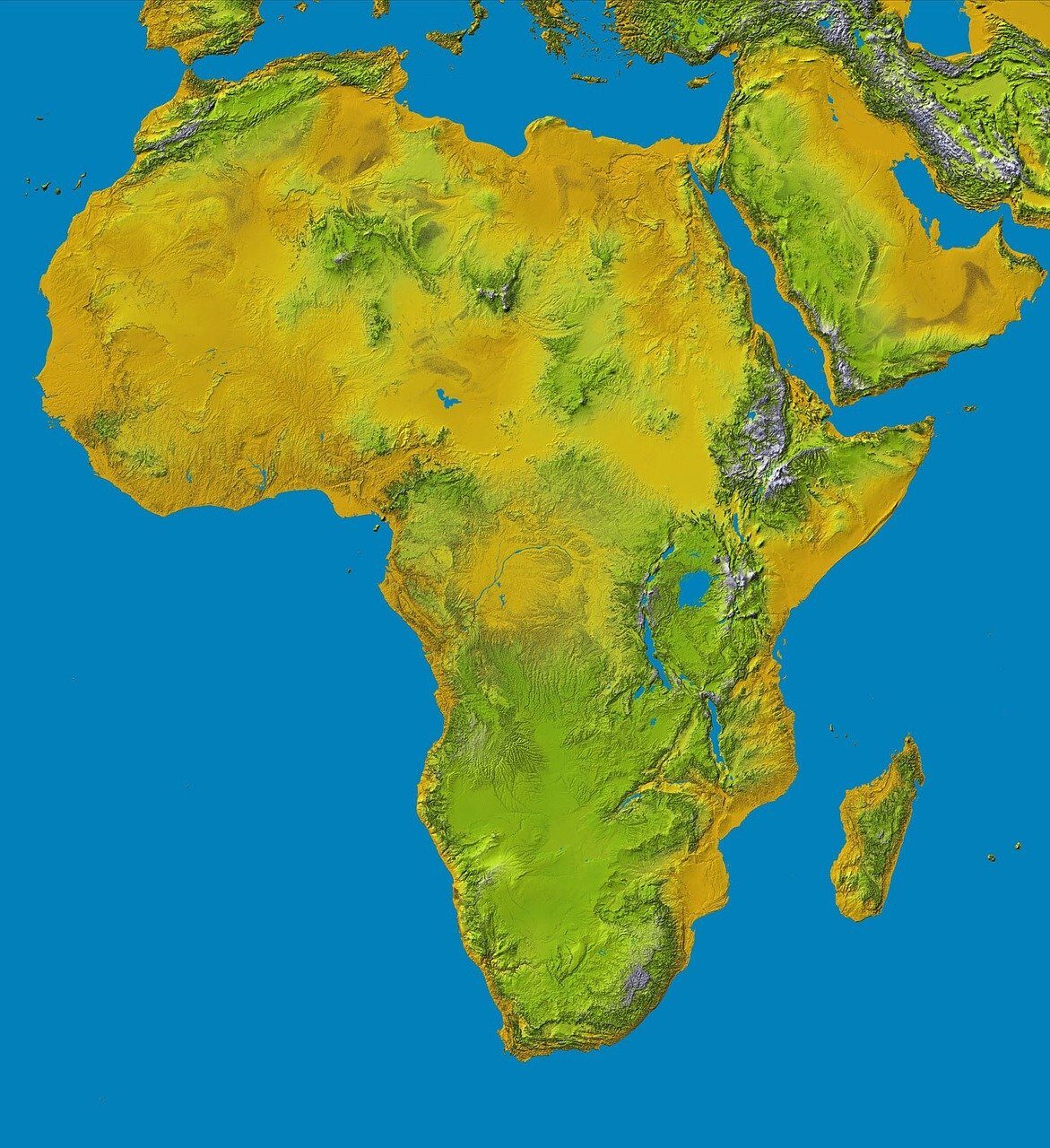
Individual and Community Factors as Correlates of Climate Change Awareness and Action among 15 African Countries

In Africa, the scientific evidence on climate change awareness and action from country-based data is limited, and few studies have examined the associations between individual and community level characteristics and climate change awareness and action. A sample from country-based data (Afrobarometer Round 9), from 15 African countries was used to examine the relationship between individual and community variables and climate change awareness and action. Data were analysed by means of frequency counts, t-tests, analysis of variance, correlation and stepwise regression analyses. The findings revealed that the proportion of individuals who had heard of climate change ranged from 22% in Tunisia to 75% in Zimbabwe, and those who believed that climate change was affecting their countries ranged from 10.2% in Ghana to 53.8% in Malawi. Across the sampled countries, only 47.1% of participants had heard about climate change while 34.6% believed climate change affected them. In all the countries studied, participants believed it was the responsibility of government to check and fight climate change. However, statistical significant differences were observed in the awareness of climate change between urban and rural respondents. Age of respondents and their place of residence were found to be positively correlated with climate change awareness and action. Findings from stepwise multiple regression analysis also revealed that climate change awareness was the most parsimonious predictor of climate change action (R2=0.275). The study concluded that individual and community level variables are important precursors to climate change awareness whilst fostering willingness towards climate change action should be an integral part of any intervention.

climban
CLIMATE CHANGEEVENTS

Invitation to Webinar on 28 Aug 2025: Advancing data sharing for climate action

This webinar aims to examine the current state of climate data sharing and interoperability across research institutions in the G20, with particular attention to the Global South. It will explore how Indigenous Knowledge Systems (IKS) are being integrated into climate data ecosystems and discuss enabling policy frameworks and initiatives that support open climate data. The discussion will identify opportunities for scientific communities to bridge policy and practice and take a leadership role in open data governance. South Africa’s contributions and challenges will be highlighted, particularly through the work of ASSAf, SAEON, and the National Climate Change Information System (NCCIS). Finally, the webinar will explore how these efforts align with global initiatives, such as the G20 Environment and Climate Sustainability Working Group and the Initiative on International Cooperation in Open Science, launched by China, Brazil, South Africa, and the African Union at the 2024 G20 Summit.


View the programme

Register here

beach-1845945_1280
CLIMATE CHANGE

ASSAf publishes policy brief on air quality offsets as an air quality management instrument

A policy brief on air quality offsets as an instrument for air quality management in South Africa has been published under the auspices of the Academy of Science in South Africa (ASSAf). The brief explores the potential of air quality offsets to leverage resources and mitigate air pollution in historically neglected, predominantly low-income areas. It addresses legal and technical aspects, outlines societal benefits, and offers actionable recommendations for policymakers, communities, advocacy groups, and researchers.

ai-generated-9073517_1280
CLIMATE CHANGE

Integrating Air Quality and Climate Change: A Policy Imperative for Human Well-Being and Equity for the G20

South Africa has assumed the Presidency of the Group of 20 (G20) of the world’s most significant economies in 2025 with a theme of “Fostering Solidarity, Equity and Sustainable Development.” During this period, the Academy of Science of South Africa (ASSAf) has led discussions among the academies of the G20 countries, including the African Union, in a process known as the Science 20 (S20). The theme for the S20 is “Climate Change and Well-being.” The editorial team of the Clean Air Journal has felt it appropriate to draft an editorial in support of this process and to highlight the importance of including air pollution in a material way, as it has a large impact on well-being and equity. Decreasing pollution should be a key tenet in fostering solidarity, equity, and sustainable development. This is particularly true in Africa, where under a business-as-usual scenario, air pollution is estimated to cause 930,000 premature deaths per year in 2030 and is projected to increase to about 1.6 million premature deaths per year in 2063 without increased and dedicated action.