noaa-Xg3CyPeA7Ag-unsplash
CLIMATE CHANGE

Role of higher education in climate change needs review

Source: https://www.universityworldnews.com/post.php?story=20251118080310969

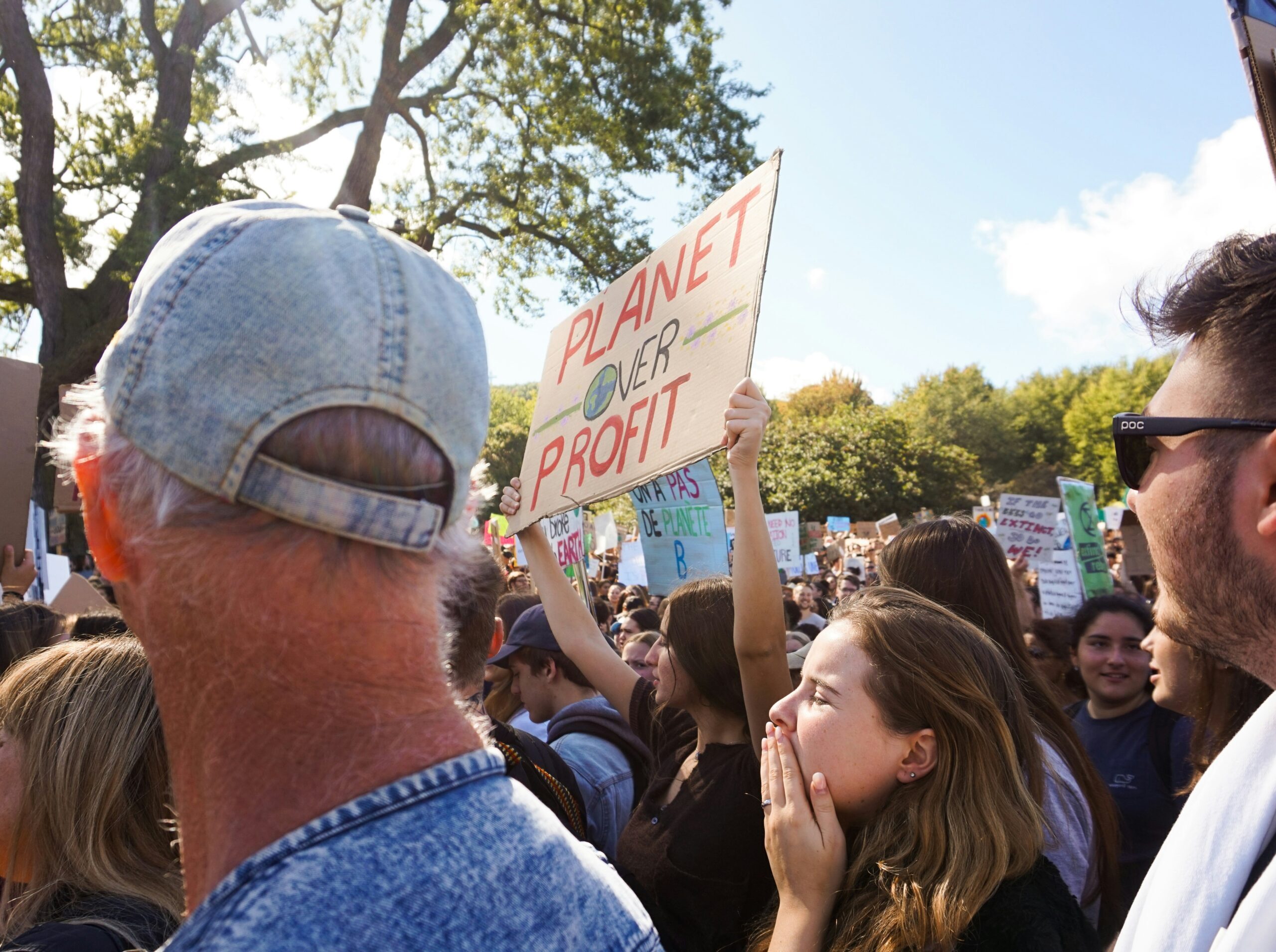
The role of higher education in tackling climate change needs to be reviewed, as universities are not included enough in discussions about the crisis facing the world, according to a leading academic.

Tristan McCowan, professor of international education and vice-dean international at University College London’s Institute of Education, said universities needed to be given a stronger voice in debates around the climate crisis because of the levels of expertise that existed within them.

McCowan, who set up the Climate-U network of universities and organisations in 27 countries, which recently held its annual conference in Brazil ahead of the United Nations COP30 conference, said higher education was “not nearly involved enough in some of these negotiations and the action plans that come out of them”.


noaa-QRBe3Ithczs-unsplash
CLIMATE CHANGE

Climate science in Singapore focuses on tropical priorities

Sourcee: https://www.universityworldnews.com/post.php?story=20251117155659554

Singapore is spending millions of dollars in climate research focused on the tropics, a hitherto neglected area of scientific knowledge.

Singapore’s climate science research efforts were launched in earnest on 5 November 2020 when the Climate Science Research Programme Office was set up to drive the research efforts of this small but densely populated island nation in response to its growing need for robust climate adaptation strategies.

In March 2025, a new S$25 million (US$19.2 million) Weather Science Research Programme (WSRP) was launched to enhance Singapore’s ability to understand and predict tropical urban weather, including extreme weather arising from climate change.

On 5 September 2025, the Climate and Weather Research Alliance Singapore (CAWRAS) was established as a national research platform to advance tropical climate and weather research for Singapore and Southeast Asia.

yumu-81NAQdCecPo-unsplash
CLIMATE CHANGE

South Africa plans for carbon removal to curb global warming

Source: https://www.universityworldnews.com/post.php?story=20251117141331178

With the 30th United Nations Climate Change Conference now under way in Belém, Brazil, a new report from the UN Environment Programme (UNEP) shows that global average temperatures are set to exceed the goal of limiting the rise to 1.5°C above pre-industrial levels.

While some annual averages have already crossed that threshold, the goal agreed to in Paris 10 years ago refers to a 20-year global mean temperature, which scientists now expect to be breached within the next decade. To stay below it, global greenhouse gas emissions would need to fall by 55% by 2035 – an outcome now seen as increasingly unlikely.


20250709_Manifesto_Euromed_Climate_1170x440px-1400×530
CLIMATE CHANGE

Euromed University Initiative for Climate Action

Source: https://www.universityworldnews.com/post.php?story=20251118083325200

More than 80 universities from 25 countries in the Euro-Mediterranean region are stepping up their role in addressing climate change in higher education, innovation and governance through the Euromed University Initiative for Climate Action.

The initiative was officially launched during a side event on 12 November at the United Nations COP30 global climate conference in Belém, Brazil.

Its foundational declaration and call to action was the Girona Manifesto on climate action, launched by universities and research institutions in the Euro-Mediterranean region in July this year.

welfact-L23bjoGZzs8-unsplash
CLIMATE CHANGE

Climate action: Universities thrive as transformative hubs


Source: https://www.universityworldnews.com/post.php?story=2025111714065615

The academic investment in sustainability that goes behind simple campus greening is increasing, with higher education institutions becoming transformative hubs for climate action, both physically and intellectually, while offering innovative education for sustainable development (ESD) programmes.

A report of the European University Association (EUA) on Sustainability and Greening in European Higher Education, which will be released soon, shows that since 2021, higher education engagement for sustainability and greening has been increasing, Henriette Stoeber, senior policy analyst in the EUA Higher Education Policy Unit, told University World News.

dom-fou-YRMWVcdyhmI-unsplash
CLIMATE CHANGE

HE, students pivotal in the climate change battle – COP30

Source: https://www.universityworldnews.com/post.php?story=20251119173204639

Across Africa, universities, research institutions and youth-led movements are set to build on key outcomes of COP30 to demonstrate how knowledge can be transformed into agency, and education can become the foundation of climate resilience.

The 2025 United Nations (UN) Climate Change Conference (COP30), held from 10-21 November in Belém, Brazil, focused on the theme, ‘Collective efforts to address climate change’.

Calls for climate education to be a foundational investment across all levels of learning – including universities – has been a feature of this year’s gathering.

Following the launch of the 2025 Global Youth Statement (GYS) at the start of COP30, highlighting education’s role in climate justice and representing 30,000 young voices, including from Africa’s most climate-vulnerable communities, UNESCO later unveiled new education tools under its existing Greening Education Partnership (GEP), which includes practical strategies to support governments, universities, educators and local authorities in the climate change battle.

isc
CLIMATE CHANGE

Global call to protect climate science and collaboration

Source: https://www.universityworldnews.com/post.php?story=20251118091032121

https://platform.twitter.com/widgets/tweet_button.2f70fb173b9000da126c79afe2098f02.en.html#dnt=false&id=twitter-widget-0&lang=en&original_referer=https%3A%2F%2Fwww.universityworldnews.com%2Fpost.php%3Fstory%3D20251118091032121&size=m&text=Global%20call%20to%20protect%20climate%20science%20and%20collaboration&time=1763994477362&type=share&url=https%3A%2F%2Fwww.universityworldnews.com%2Fpost.php%3Fstory%3D20251118091032121

https://www.facebook.com/plugins/share_button.php?href=https%3A%2F%2Fwww.universityworldnews.com%2Fpost.php%3Fstory%3D20251118091032121&layout=button_count&size=small&mobile_iframe=true&width=106&height=28&appIdFaced by devastating cuts to research funding and collaboration in several regions, the world needs to rethink how climate science is resourced, conducted and integrated into policy, the International Science Council (ISC) has said in a hard-hitting statement that reaches beyond climate to the heart of global science production.

“Acute resource shortages resulting from these cuts pose existential risks for longstanding networks and institutions that have served the global community as platforms for coordinated knowledge development and are recognised for their positive impact at national and regional levels,” it said.

The statement from the ISC and affiliated bodies, “Safeguarding and Enhancing International Scientific Collaboration for Climate Action”, was published on 4 November ahead of the 30th United Nations Climate Change Conference (COP30) under way in Belém, Brazil.

inaki-del-olmo-NIJuEQw0RKg-unsplash
CLIMATE CHANGE

The deep consequences of climate change for universities

Source: https://www.universityworldnews.com/post.php?story=20251117141008329

Climate change is far more consequential for universities than many recognise.

Climate change is a systemic risk and requires a systemic response. The challenge we face is to simultaneously reduce the impacts of our activities on the climate and reduce the impacts of the changing climate on our activities – or at least on those activities that we want to sustain into the future.

The twin challenges of bringing down atmospheric concentrations of greenhouse gases and adapting to emerging impacts and risks are inter-dependent. If we do not limit climate change, it will limit our adaptation; and if we do not contain climate change impacts, they will undercut our capacity to decarbonise.

vitaly-gariev-8c0ndhIXDzQ-unsplash
CLIMATE CHANGE

Young climate scientists push Africa-led action at COP30

Source: https://www.universityworldnews.com/post.php?story=20251109145710590

As COP30 opened with a precursor event on 6 November 2025 in Belém, Brazil, with the Summit of Heads of State and Government, young African scientists, researchers and youth organisations prepared to join world leaders and other actors to drive innovative Africa-led, locally driven climate change solutions in the global fight against the climate crisis.

This year’s United Nations (UN) Climate Change Conference (COP30), runs from 10-21 November under the broad topic, ‘Collective efforts to address climate change’.


mentalhealth
CLIMATE CHANGE

Webinar on The Climate – Mind Connection: How Climate Change Affects Our Mental Health | 21 Nov 2025


As the planet warms, its effects extend beyond the physical environment to our emotional and mental well-being. Climate change is linked to rising levels of anxiety, depression, and stress – especially among vulnerable populations. From floods and heatwaves to economic insecurity and displacement, environmental disruptions are taking a growing psychological toll. This webinar explores the vital yet often overlooked connection between climate change and mental health. Experts will unpack the evidence, share insights from research and practice, and discuss strategies to build resilience and support mental wellbeing in the face of climate uncertainty.